
Shed Foundation Types Compared
Gravel pads, concrete slabs, treated skids and pier footings, and when each one is the right call.
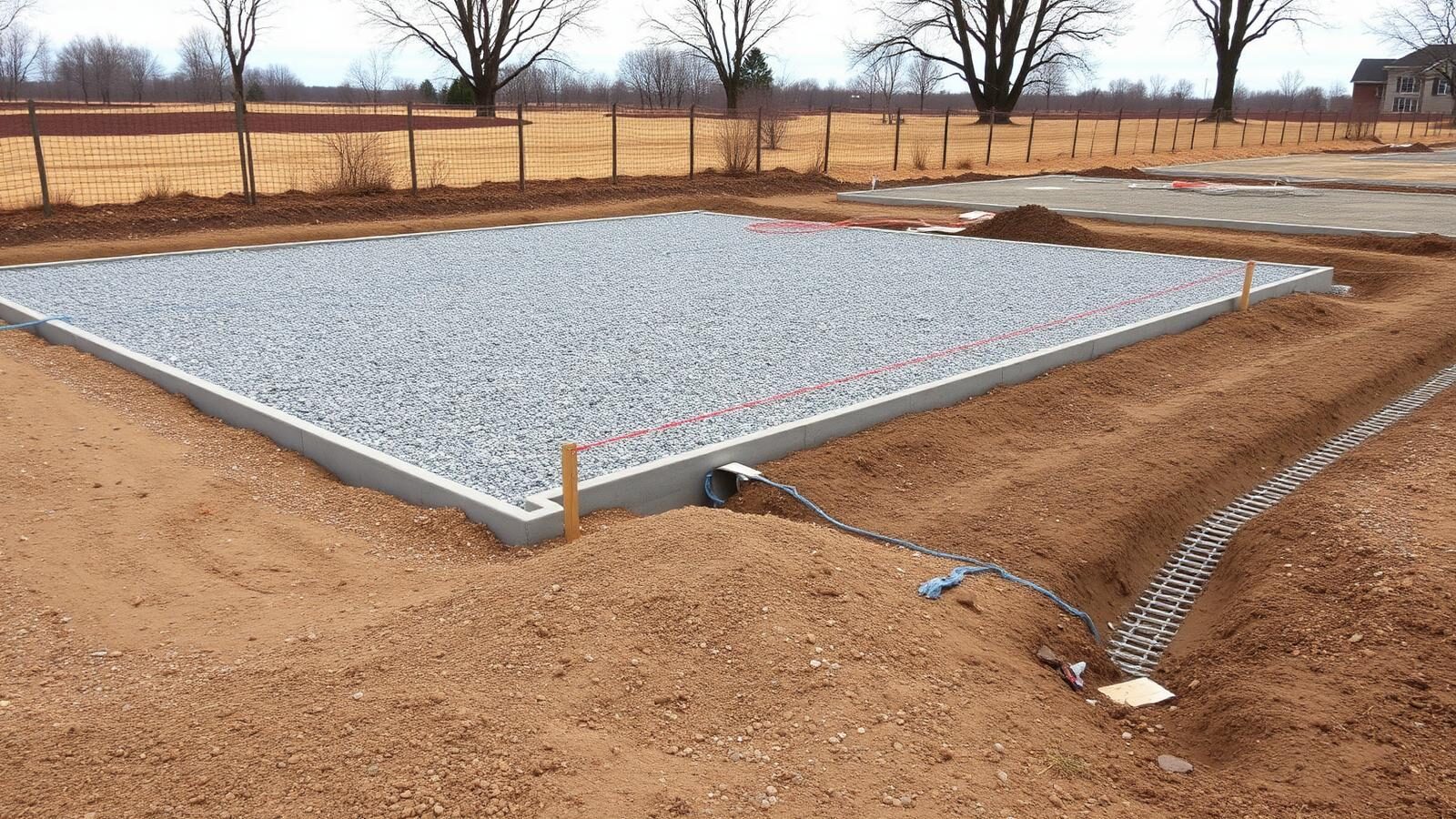
Compacted gravel pad
The default for most sheds. Four to six inches of compacted crushed stone over a leveled, contained base drains well, costs less than concrete and lets the building breathe. Use edge containment so the stone does not migrate.
Treated skids
Pressure-treated 4x6 or 6x6 runners under the floor frame, set on gravel. Easy to re-level later, which matters on soils that move. This is our usual pairing with a gravel pad.
Concrete slab
Required for garages and anything holding vehicles. A four-inch slab with thickened edges, wire or fiber reinforcement, and a vapor barrier underneath. More expensive, permanent, and worth it for shops.
Pier and beam
Best on slopes and in hilly Hancock County terrain. Concrete piers below frost depth carry beams, keeping the floor level while following grade. Also useful where flooding is a concern.
What we ask before recommending
How does water currently move across the site? What is the soil? Will the building hold vehicles? Do you ever want to move it? Those four answers pick the foundation almost every time.
Want a second opinion on your project?
We answer questions like these by email every week, whether or not you hire us. Send details through the contact form, or look at the buildings we construct and the towns we serve.
More guides
- Shed Size Guide: Choosing the Right Footprint
- Shed Permits & Setbacks in Daviess County
- Wood vs. Metal Sheds in Kentucky Weather
- Seasonal Shed Maintenance Checklist
- Site Prep and Drainage for Outbuildings
- Shed Organization Ideas That Actually Last
- Insulating a Backyard Building
- Detached Garage vs. Pole Barn: Which to Build
- What Drives Shed and Outbuilding Cost
Ready to plan your building?
Send us your location, building type and rough size. We reply with options, a realistic timeline and a written estimate.